
Arthroscopic Management of Irreparable Rotator Cuff Tears: A Patient-Centered Approach
When a rotator cuff tear is deemed irreparable—meaning the torn muscle and tendon cannot be successfully stitched back to the bone—patients and their surgeons face difficult decisions about how to proceed. While reverse shoulder replacement has become increasingly popular as a solution, arthroscopic management offers meaningful benefits for carefully selected patients. This article explores why some patients achieve excellent outcomes with arthroscopic techniques rather than undergoing major joint replacement surgery.
Understanding Irreparable Rotator Cuff Tears
The rotator cuff is a group of four muscles and tendons that stabilize the shoulder joint and enable movement. Over time, repetitive stress, poor blood supply, or degenerative changes can cause tears that become "irreparable"—too large, too damaged, or with poor tissue quality to reliably repair. These tears can cause pain, weakness, and loss of function, and they tend to worsen without intervention.
When a surgeon uses arthroscopy (a minimally invasive technique using small incisions and a camera) to inspect these massive tears, they face a choice: attempt arthroscopic restoration, or recommend reverse shoulder replacement. The key is understanding which patients benefit most from each approach.
Arthroscopic Management Options
Rather than abandoning the rotator cuff, several arthroscopic techniques aim to restore function and reduce pain while preserving the native shoulder joint.
Arthroscopic Debridement The surgeon cleans away damaged tissue, bone spurs, and inflammation from the subacromial space (the area above the rotator cuff). By removing irritated tissue and creating more space, debridement can reduce pain and improve shoulder mechanics. While debridement alone doesn't repair the tear, it addresses secondary factors that contribute to discomfort and disability.
Superior Capsular Reconstruction (SCR) This innovative technique uses a graft (often harvested from the patient's own tissue) to reinforce the superior (top) portion of the shoulder joint capsule. By creating a more stable environment, SCR can compensate for the missing rotator cuff, particularly the supraspinatus muscle. Studies have shown that this approach can restore overhead strength and improve function in selected patients, with success rates comparable to some reverse shoulder cases.
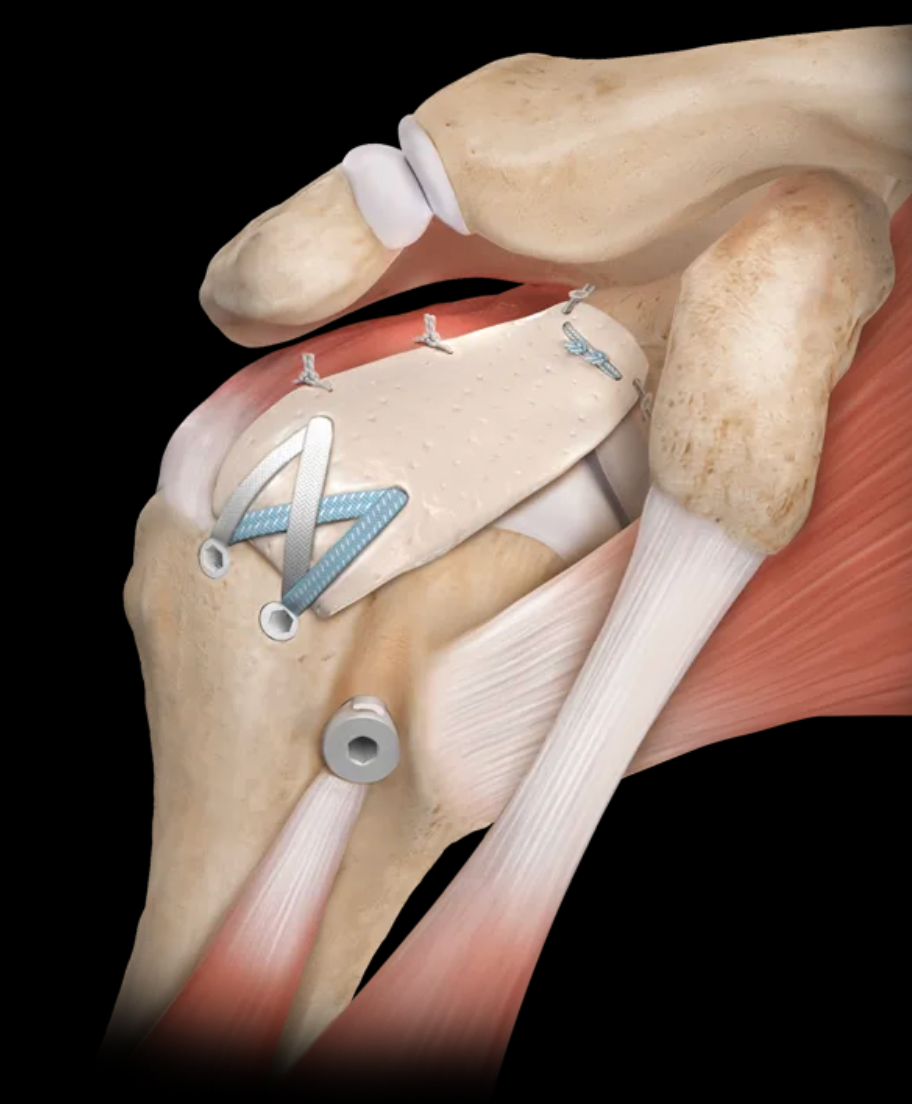
Arthroscopic Subacromial Spacer (Tuberoplasty) A synthetic or biologic spacer is placed in the subacromial space to create a mechanical barrier. This prevents the humeral head (upper arm bone) from migrating upward—a common problem in irreparable tears. The spacer acts as an artificial bumper, restoring the ball-and-socket geometry of the shoulder and improving muscle function. This technique preserves bone and soft tissue, maintaining options for future procedures.

Partial Repair with Augmentation In some cases, surgeons can partially repair the tear (even if not completely) and reinforce it with biological or synthetic materials. While the repair may not be anatomically perfect, restoring even partial continuity of the rotator cuff can provide meaningful functional gains.
The Critical Role of Patient Selection
Not all patients with irreparable rotator cuff tears are candidates for arthroscopic management. Appropriate patient selection is essential for achieving good outcomes.
Ideal candidates typically have:
Reasonable quality of remaining rotator cuff tissue, even if torn. Severely atrophied or degenerated muscles are less likely to respond to arthroscopic techniques.
Moderate functional demands. Patients seeking to return to overhead sports or heavy labor may have higher expectations than arthroscopic management can reliably achieve.
Preserved or minimally affected deltoid muscle (the large shoulder muscle). The deltoid must be strong and healthy to compensate for rotator cuff loss.
No or minimal arthritis of the shoulder joint. Significant arthritis may necessitate reverse replacement regardless of rotator cuff status.
Realistic expectations. Arthroscopic management typically restores function for activities of daily living (dressing, reaching, light lifting) but may not restore full strength to normal levels.
Younger age (though not a strict requirement). Patients in their 40s, 50s and 60s and otherwise healthy are often good candidates. Very elderly patients will definitely benefit more from reverse replacement's more predictable outcomes.
Why Choose Arthroscopic Management Over Reverse Shoulder Replacement?
When a patient is appropriate, arthroscopic management offers several compelling advantages:
Joint Preservation Reverse shoulder replacement is a major surgery that permanently alters shoulder anatomy. It removes or reshapes bone, implants artificial materials, and cannot be perfectly reversed. Arthroscopic management preserves the native shoulder joint, maintaining options for future procedures if needed.
Bone Stock Preservation Reverse replacement requires removing bone to accommodate the implant. In contrast, arthroscopic techniques protect valuable bone. This is particularly important for younger patients who may eventually need revision surgery.
Lower Short-term Morbidity Arthroscopic procedures involve smaller incisions, less muscle trauma, shorter hospital stays, and faster recovery. Patients return to light activities sooner, which improves quality of life during rehabilitation.
Avoidance of Implant Complications Reverse shoulder replacements, while generally successful, carry specific risks: implant loosening, bearing surface wear, nerve injury, and the need for potential revision surgery. These complications may require additional major surgeries. Arthroscopic management avoids implant-related risks.
Adequate Functional Outcomes For many patients, arthroscopic management provides sufficient pain relief and functional improvement to significantly enhance quality of life. Recent data suggest that properly selected patients using arthroscopic SCR or spacer techniques achieve satisfaction rates of 80-90%, with meaningful improvements in pain and function.
Cost Considerations Arthroscopic procedures are generally less expensive than reverse shoulder replacement, with lower immediate costs and fewer downstream complications requiring revision surgery.
Realistic Expectations and Outcomes
Arthroscopic management is not a "cure" for irreparable rotator cuff tears. Successful outcomes include:
Significant pain relief (often 60-80% improvement)
Restoration of functional strength for daily activities
Improved range of motion
Return to recreational activities
However, patients should understand that overhead strength and capacity for heavy lifting may not return to normal levels. The goal is functional restoration and improved quality of life—not perfect anatomic repair.
Conclusion
Irreparable rotator cuff tears represent a challenging orthopedic problem without perfect solutions. While reverse shoulder replacement has an important role, arthroscopic management offers a viable alternative for carefully selected patients. Through joint-preserving techniques like superior capsular reconstruction, subacromial spacing, and augmented repair, many patients experience meaningful improvement in pain and function while avoiding major joint replacement.
The key to success lies in honest patient selection, clear communication about expectations, and matching the patient's goals and anatomy to the most appropriate procedure. For the right patient, arthroscopic management can provide years of improved shoulder function and quality of life while preserving the native shoulder joint for the future.
References
Burkhart SS, Nottage WM. Massive rotator cuff tears: Treatment options and results. Instructional Course Lectures. 2007;56:3-12.
Mihata T, Lee TQ, Watanabe C, et al. Clinical results of arthroscopic superior capsule reconstruction for irreparable rotator-cuff tears. Journal of Bone and Joint Surgery. 2013;95(15):1377-1383.
Denard PJ, Brady PC, Adams CR, Tokish JM, Burkhart SS. Preliminary results of arthroscopic superior capsule reconstruction with dermal allograft. Journal of Shoulder and Elbow Surgery. 2018;27(6):1007-1016.
Hartzler RU, Barlow JD, An KN, Cummings DS, Gorman JH, Gorman RC. Importance of deltoid and rotator cuff function after repair of massive rotator cuff tears. Journal of Shoulder and Elbow Surgery. 2019;28(2):201-207.
Cheung S, Karunaratne S, Boey C, et al. Arthroscopic debridement and subacromial spacer insertion for massive irreparable rotator cuff tears: Clinical outcomes. Arthroscopy: The Journal of Arthroscopic & Related Surgery. 2019;35(6):1667-1675.
De Wilde LF, Audenaert EA, Berghs BM. Shoulder function after early repair of massive rotator cuff tears. Journal of Shoulder and Elbow Surgery. 2003;12(6):622-627.
Wall B, Nove-Josserand L, O'Connor DP, Edwards TB, Walch G. Reverse total shoulder arthroplasty: A review of results according to etiology. Journal of Bone and Joint Surgery America. 2007;89(7):1476-1485.


Comments