
Modern Management of Osteoarthritis
Osteoarthritis is, at its core, a disease of cartilage exhaustion — a slow grinding away of the biological shock absorbers that let joints move freely and without pain. In my practice, I see patients in their fifties and sixties who are desperate not to cross the bridge into total joint replacement. Increasingly, they're asking me about stem cell therapy. My honest answer has become more nuanced over the past five years, because the science has genuinely matured.
Two cell sources dominate serious clinical investigation right now: bone marrow-derived mesenchymal stem cells (BM-MSCs) and micronized adipose (fat) tissue, which contains stromal vascular fraction rich in adipose-derived stem cells. Both arrive at the joint through injection, and both appear to do something useful — though not always what we initially expected.
Be warned, what follows is a bit technical but I think well worth reading for someone considering biologic treatment of their knee or shoulder osteoarthritis.

MECHANISM OF ACTION
How do these cells actually help?
Early enthusiasm was built on the idea that injected stem cells would physically differentiate into new chondrocytes — rebuilding cartilage from scratch. That picture has proven overly optimistic. Most evidence now points to a predominantly paracrine mechanism: the cells act less like building blocks and more like biological signalers, secreting growth factors, cytokines, and extracellular vesicles that modulate the joint environment.
The four primary proposed mechanisms are:
Anti-inflammatory signaling: Secretion of IL-10, TGF-β, and IDO suppresses pro-inflammatory macrophage activity and synovial inflammation — the primary driver of OA pain.
Chondroprotection: Growth factors including IGF-1 and FGF-2 reduce chondrocyte apoptosis and slow the matrix metalloproteinase-driven cartilage breakdown.
Trophic support: Secreted exosomes promote survival of resident progenitor cells already in the joint, amplifying the endogenous repair response.
Subchondral remodeling: BM-MSCs in particular may influence the bone-cartilage interface, dampening the abnormal bone turnover that accelerates late-stage OA.
THE EVIDENCE
Here are the studies that I refer my patient's to read if they are curious about the primary research supporting the use of stem cells. I implore people to notice that all of the studies reference autologous stem cells (derived from one's own body). All other injectables marketed as stem cells that are not harvested from the patient are not currently supported by serious clinical research, although some clinical trials are presently underway.
Bone Marrow Derived Stem Cells
Centeno et al. (2008)
Demonstrated that cultured autologous BM-MSCs reduced pain scores and showed MRI evidence of cartilage signal change in a cohort of knee OA patients. While criticized for its observational design, it seeded a wave of more rigorous trials.
Lamo-Espinosa et al., Journal of Translational Medicine (2016 & 2018)
In this randomized controlled trial of 30 patients with knee OA, intra-articular injection of autologous BM-MSCs (with and without hyaluronic acid) produced statistically significant improvements in WOMAC pain and function scores at 12 months compared to hyaluronic acid alone. MRI showed cartilage quality stabilization in the stem cell groups. This was one of the first properly controlled human trials to demonstrate both functional and structural benefit.
Shapiro et al., American Journal of Sports Medicine (2017)
A placebo-controlled, double-blind RCT of bone marrow concentrate versus saline in 25 patients with bilateral knee OA. Both knees improved — including the saline-injected knee — raising important questions about placebo effect and systemic response. However, the BM-concentrate group showed significantly greater cartilage thickness preservation on quantitative MRI at 12 months, lending biological plausibility to a structural effect beyond placebo.
Adipose-Derived Cells (Micronized Fat)
Fat is easier to harvest in larger quantities than bone marrow, and micronized adipose tissue — processed through mechanical emulsification rather than enzymatic digestion — has attracted significant interest as a same-day, point-of-care option that sidesteps regulatory hurdles around cultured cells.
Koh et al., Arthroscopy (2013) & follow-up (2016)
Koh's group in Seoul published early comparative data showing that adipose-derived stromal vascular fraction (SVF) injected alongside PRP produced clinically meaningful reductions in VAS pain scores and improvements in Lysholm knee scores compared to PRP alone at 24 months. Histological samples from select patients suggested fibrocartilaginous tissue deposition at defect margins — tantalizing though not definitive evidence of a tissue-level effect.
Russo et al., Stem Cells International (2016)
The Lipogems system — a proprietary mechanical micronization device — was evaluated in knee OA in a multicenter Italian study. Forty-nine patients received intra-articular Lipogems. At 12 months, 74% achieved the MCID threshold on KOOS pain subscale, with a favorable safety profile and no serious adverse events. This was a pivotal industry-linked study, but its scale and multicentre design added meaningful real-world signal.
MY CLINICAL PERSPECTIVE
Where does this leave us in practice?
The evidence is real enough that I no longer consider these purely experimental for carefully selected patients — those with moderate OA (Kellgren-Lawrence grade II–III), good alignment, and realistic expectations. For the knee, bone marrow concentrate has the strongest trial-level support and I think is the best option for patients undergoing surgery. Micronized fat is a reasonable alternative where same-day processing is prioritized and larger stromal cell volumes are desired.
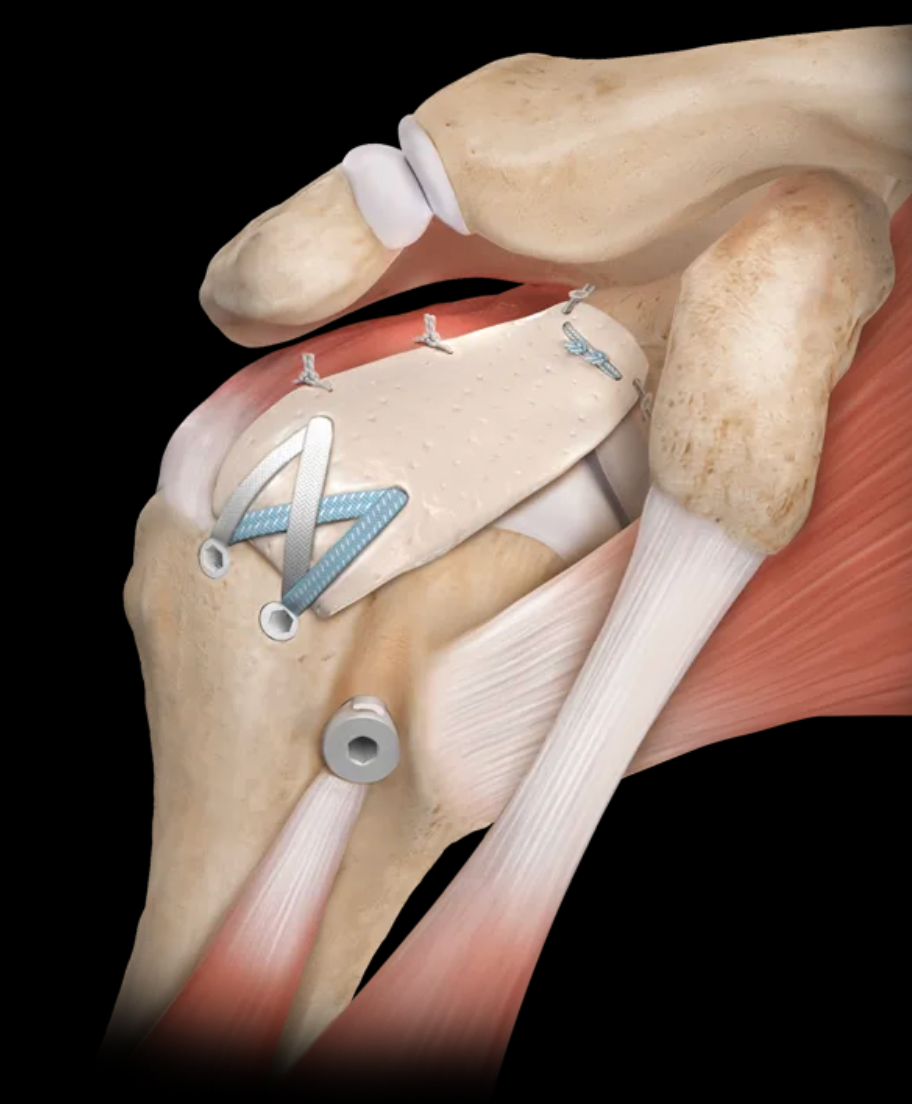
For the shoulder, I remain more cautious. The anatomical variables are greater, the natural history of glenohumeral OA more variable, and the comparator (total shoulder replacement) remains excellent.
I use these approaches selectively, in younger patients or in combination with an arthroscopic procedure already planned.
What I tell every patient is the same: this will not regenerate your cartilage to the state it was in at age 25. What it may do — and what the best evidence supports — is meaningfully reduce pain, slow progression, and defer the need for arthroplasty by several years. For many of my patients, that is a life-changing outcome.
The field is moving quickly. Allogeneic off-the-shelf BM-MSC products are in phase II/III trials and may transform accessibility within this decade. For now, the most important thing a patient can do is seek out a provider who is honest about what the evidence shows — and equally honest about what it doesn't.

Comments