
Inlay vs Stemmed Humeral Components in Reverse Total Shoulder Arthroplasty (RTSA)

Reverse total shoulder arthroplasty (RTSA) has become a highly reliable solution for patients with severe shoulder arthritis, rotator cuff tears, fractures, and failed prior shoulder surgery. As implant designs evolve, patients often ask about newer “stemless” or inlay implants versus traditional stemmed shoulder replacements, and how these choices affect recovery, durability, and long-term outcomes.
Inlay vs Onlay Humeral Components: What’s the Difference?
A traditional onlay humeral implant uses a metal stem that extends down the arm bone (humerus) for fixation. This design has decades of proven success and works well even when bone quality is limited.
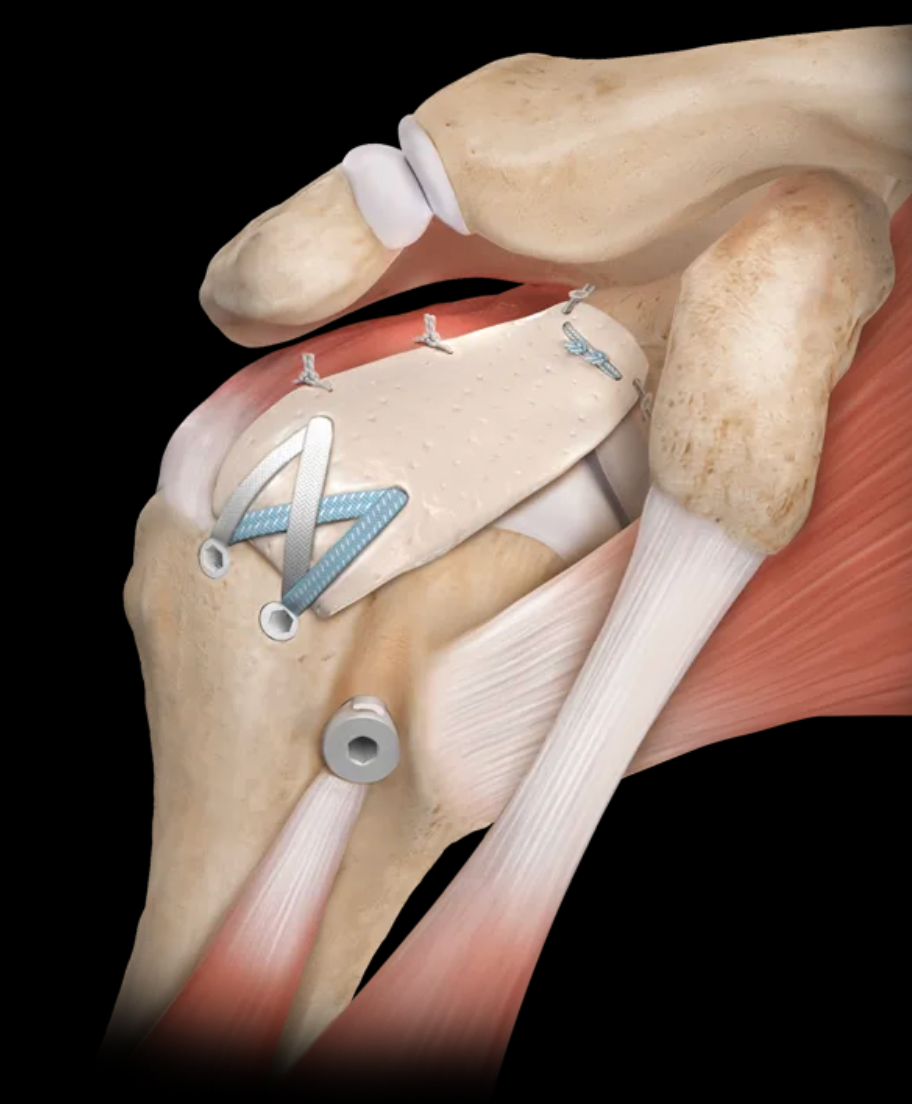
An inlay humeral component sits within the upper part of the humerus (the metaphysis) rather than down the canal. It preserves more bone, reduces stress on the arm bone, and can make future revision surgery easier—but it requires good bone quality to be effective.
Why Implant Design and Lateralization Matter

Modern RTSA increasingly restores shoulder mechanics by lateralizing the joint from the shoulder blade (glenoid side) rather than from the arm bone. This approach:
Improves shoulder strength and efficiency
Reduces wear and scapular notching
Places less stress on the humeral implant
When combined with an inlay humeral component, scapular-side lateralization allows the shoulder to move more naturally while preserving bone and reducing long-term implant stress.
How I Choose the Right Implant
I always say there is no single “best” implant for every patient.
Inlay humeral components are often ideal for patients with good bone quality, especially younger or active individuals. I find that inlay humeral components are also really helpful for small patients where onlay components tend to overtension the deltoid and the increase glenoid lateralization reduces early impingement.
Onlay humeral implants remain the best choice for patients with poor bone quality, fractures, or complex revision cases.
The goal is a stable, durable shoulder replacement that restores function while preserving future options.
Patient-Focused FAQs
What is reverse total shoulder arthroplasty (RTSA)?
RTSA is a type of shoulder replacement used when the rotator cuff is severely damaged or absent. The ball and socket are reversed to allow the deltoid muscle—rather than the rotator cuff—to power the shoulder.
What is an inlay or stemless shoulder implant?
An inlay (sometimes called stemless) humeral implant is a shoulder replacement component that does not extend far down the arm bone. It sits securely in the upper part of the bone and preserves more natural bone structure.
Is a stemless or inlay implant better than a stemmed implant?
Not always. Inlay implants can be excellent for patients with good bone quality, but stemmed implants may be safer and more durable for patients with weaker bones or complex anatomy. The “best” option depends on your individual situation.
Will an inlay implant last as long as a traditional stem?
Early and mid-term studies show excellent outcomes, but traditional stemmed implants have longer-term data. Your surgeon balances current evidence, bone quality, and future revision risk when making a recommendation.
Does implant choice affect recovery time?
Recovery protocols are usually similar. Some patients with inlay implants may experience less post-operative bone pain, but rehabilitation depends more on soft-tissue healing and muscle conditioning than implant type.
What is scapular or glenoid lateralization, and why should I care?
Scapular (glenoid) lateralization moves the joint outward from the shoulder blade rather than the arm bone. This improves strength, reduces wear, and helps the shoulder move more naturally—especially when paired with modern implant designs.
Will I have more range of motion with one implant type over another?
Range of motion depends on many factors, including muscle condition, anatomy, and surgical technique. Implant design plays a role, but proper alignment and rehabilitation are just as important.
If my shoulder replacement fails, can it be revised?
Yes. One advantage of inlay humeral components is that they preserve bone, which can make revision surgery easier if it is ever needed.
How long does a reverse shoulder replacement last?
Most modern RTSA implants last 15–20 years or longer. Longevity depends on implant design, activity level, bone quality, and overall health.
Am I a candidate for an inlay humeral component?
You may be a candidate if you have good bone quality and no major deformity or fracture of the upper humerus. Your surgeon will confirm this with imaging and intraoperative assessment.
What matters more than the implant itself?
Surgeon experience, proper implant positioning, and a well-structured rehabilitation plan are often more important than the specific brand or design used.
Key Takeaway
The modern approach to reverse shoulder arthroplasty—especially scapular-side lateralization combined with inlay humeral fixation—offers important biomechanical advantages for the right patient. Still, traditional stemmed implants remain essential tools. The best outcomes come from personalized implant selection, not a one-size-fits-all solution.

Comments